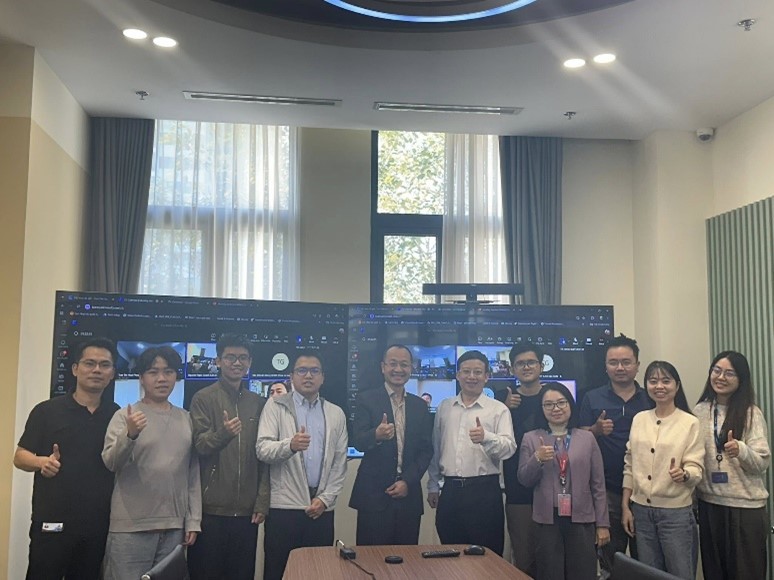
On the morning of May 13, the Ho Chi Minh City Institute for Development Studies (HIDS) hosted a scientific seminar titled “The Pillars of Green Transformation for an Expanded HCMC”. The event gathered researchers, policymakers, and stakeholders to identify the challenges and opportunities for a sustainable, low-carbon future in the nation’s economic engine.
Dr. Phan Thuy Kieu, representing the research group from HIDS, stressed the urgent need for HCMC to finalize a comprehensive green growth policy framework to reach its Net Zero target by 2050. Given that the city currently emits the highest volume of greenhouse gases nationwide — and emissions may rise further with the potential incorporation of neighboring provinces like Binh Duong and Ba Ria-Vung Tau — decisive action is critical.
Transportation and industry are identified as the two major sources of emissions, with transportation alone generating over 13 million tons of CO₂ annually. Prioritized solutions include:
- Transitioning to electric buses,
- Expanding renewable energy,
- Promoting clean manufacturing technologies.
These actions aim to align with national sustainability goals through 2030 and beyond.
With HCMC’s area potentially expanding to over 6,700 km², the city now stands at a historic juncture to become the green economic hub of the Southeast region.
Mr. Ho Nguyen Thai Bao from HIDS emphasized the importance of capitalizing on new opportunities in:
- Renewable energy production,
- Green logistics,
- Sustainable finance,
- Circular economy initiatives.
Thanks to new land reserves, interregional infrastructure, and marine ecosystems from Ba Ria-Vung Tau, the city can now:
- Develop carbon-neutral industrial zones,
- Manufacture wind energy equipment,
- Foster green waterway transport services.
However, environmental threats — particularly to mangrove forests — demand integrated planning and a shift to sustainable urban models.
Associate Professor Dr. Phan Thi Thuc Anh of VinUniversity shared the university’s strategic contributions to green transition models in Nha Trang and Khanh Hoa. These pioneering projects mobilized over 50 international and domestic experts, targeting key sectors such as:
- Green tourism
- Sustainable agriculture
- Green transportation
- Eco-friendly lifestyles
In Nha Trang, public transport usage remains extremely low at just 2.6%, while 100% of vehicles run on fossil fuels—underscoring the need for urgent investment in green mobility. The green transition plan for the province also proposed:
- Over 100 detailed projects,
- Multiple evaluation criteria sets,
- Advanced tools like Digital Twin and Building Energy Management Systems (BEMS) to attract investment and raise quality of life.
VinUni suggested HCMC adopt similar frameworks, including:
- “Plastic-free traditional markets”
- “Zero-landfill neighborhoods”
- Rooftop gardens with solar panels
- Green lifestyle education in schools
- Chatbots for sustainable consumption advice
- AI traffic management systems
Mr. Le Van Danh, Deputy Director of Ba Ria-Vung Tau Department of Industry and Trade, highlighted that financial constraints and institutional barriers are the biggest obstacles facing small and medium-sized enterprises (SMEs) in their green transition. While public funds are limited and bureaucratic, non-state green investment funds are available, offering low or even zero-interest financing. Yet, a flexible mechanism for mobilizing these resources is lacking.
He also criticized the overlapping responsibilities across government departments, making it unclear which agency is truly in charge of green economy projects—such as the Circular Economy Pilot in Con Dao, which currently operates without clear legal guidance.
According to Vu Phong Energy Group, the shift to renewable energy in industry is urgent. Many businesses are eager to install rooftop solar panels but are hindered by regulatory bottlenecks and long capital recovery periods. While the Direct Power Purchase Agreement (DPPA) mechanism had raised hopes, only Samsung has been able to implement it successfully.
“What about Vietnamese enterprises?” the representative asked. They proposed establishing a dedicated unit to support businesses with technical consulting, legal procedures, and capacity-building for local officials to accompany firms in their green transition.
The green transformation of a newly expanded Ho Chi Minh City presents immense opportunities—but also pressing challenges. Institutional clarity, financial mechanisms, and multisectoral collaboration will be crucial to unlock the city’s full potential as a leader in Vietnam’s journey to a sustainable, carbon-neutral future.